
Exploring Economic Security through the Lens of Vertex Protocol

Introduction
At Anzen Protocol, we're constantly pushing the boundaries of economic security in DeFi. Our R&D team regularly dissects various protocols to sharpen our understanding of different security approaches. Today, we're sharing our analysis of Vertex Protocol - not to make definitive statements about their security, but to use it as a case study for exploring broader concepts in DeFi economic security.
Vertex Protocol is a decentralized exchange utilizing an on-chain order book for spot and perpetual futures trading. Its design allows for efficient price discovery and liquidation processing, making it a prime example of how decentralized order book technology can be applied to various DeFi use cases beyond simple trade matching.
Open Interest
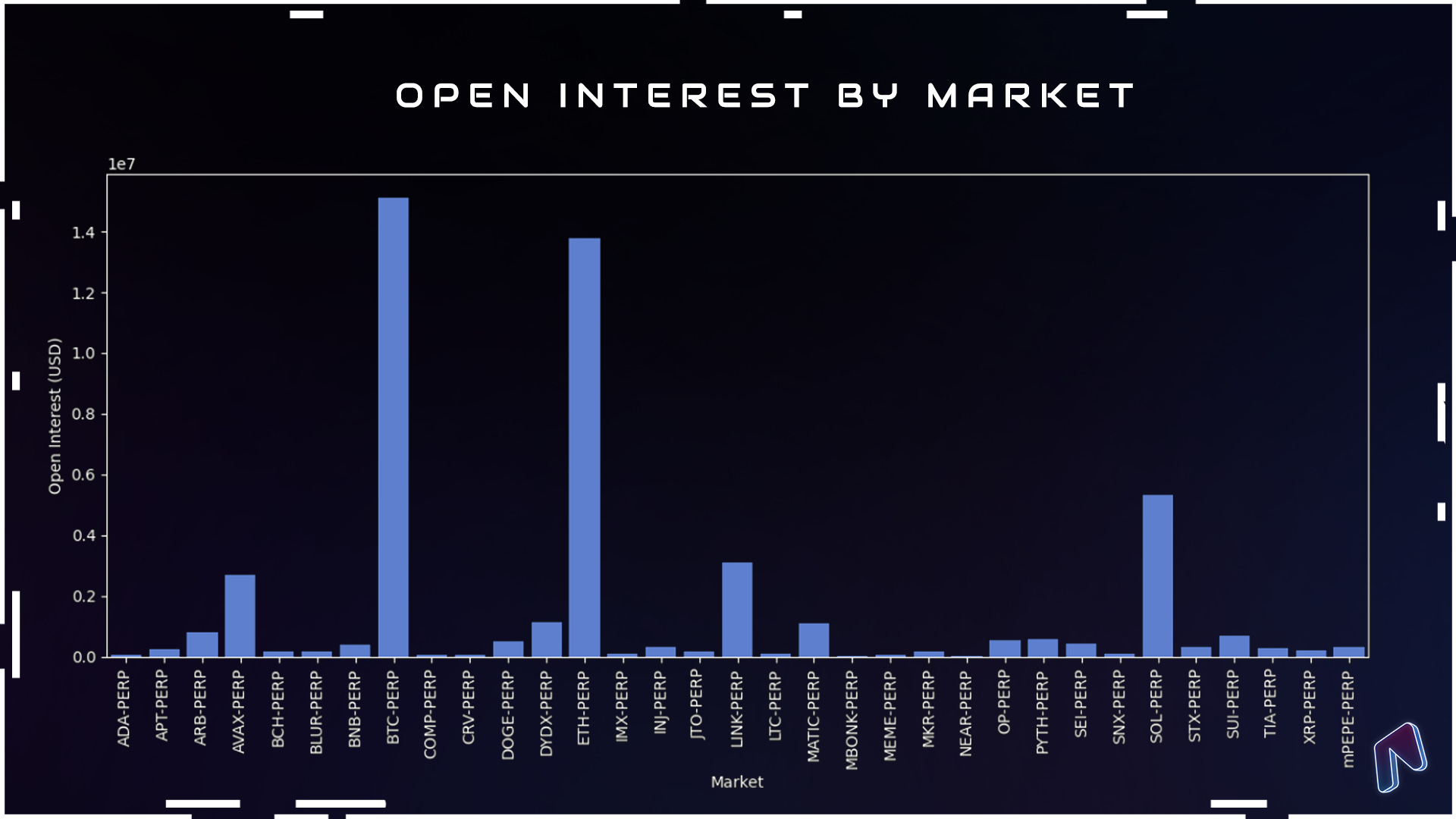
Total Open Interest: $49,154,546.95
Highest OI Market: BTC-PERP ($15,127,028.16)
The open interest data provides insight into the protocol's active markets and potential risk exposure. BTC-PERP makes up 31% of all open interest.
Vertex Protocol is not an AVS itself, however, it represents a live and successful example of a class of potential AVSs, decentralized order books. Many different types of potential AVSs could be categorized as decentralized order books, apart from merely trade matching, as the technology can be applied to a number of use cases including: assessing open interest, price discovery, and processing liquidations. This case study aims to showcase the typical methodology we use to analyze all protocols that utilize decentralized orderbook technology.
It's important to note that this analysis is based on publicly available data and our own methodologies. Our goal here is not to make definitive statements about Vertex's security, but rather to use it as a case study to explore broader concepts in DeFi economic security. In this exploration, Vertex is the sole security token for restaking.
Understanding Economic Security
Before we dive in, let's quickly recap some key concepts we use at Anzen:
Cost of Corruption (CoC): The theoretical cost an attacker would need to incur to corrupt a protocol.
Profit from Corruption (PfC): The potential gain an attacker could theoretically realize by corrupting a protocol.
Safety Factor (SF): A metric we use at Anzen to quantify a protocol's theoretical economic security, calculated as (CoC - PfC) / CoC.
These concepts form the foundation of our approach to analyzing economic security in DeFi protocols.
Exploring Vertex Protocol
1. Stake Distribution
Let's start by looking at the stake distribution in Vertex:
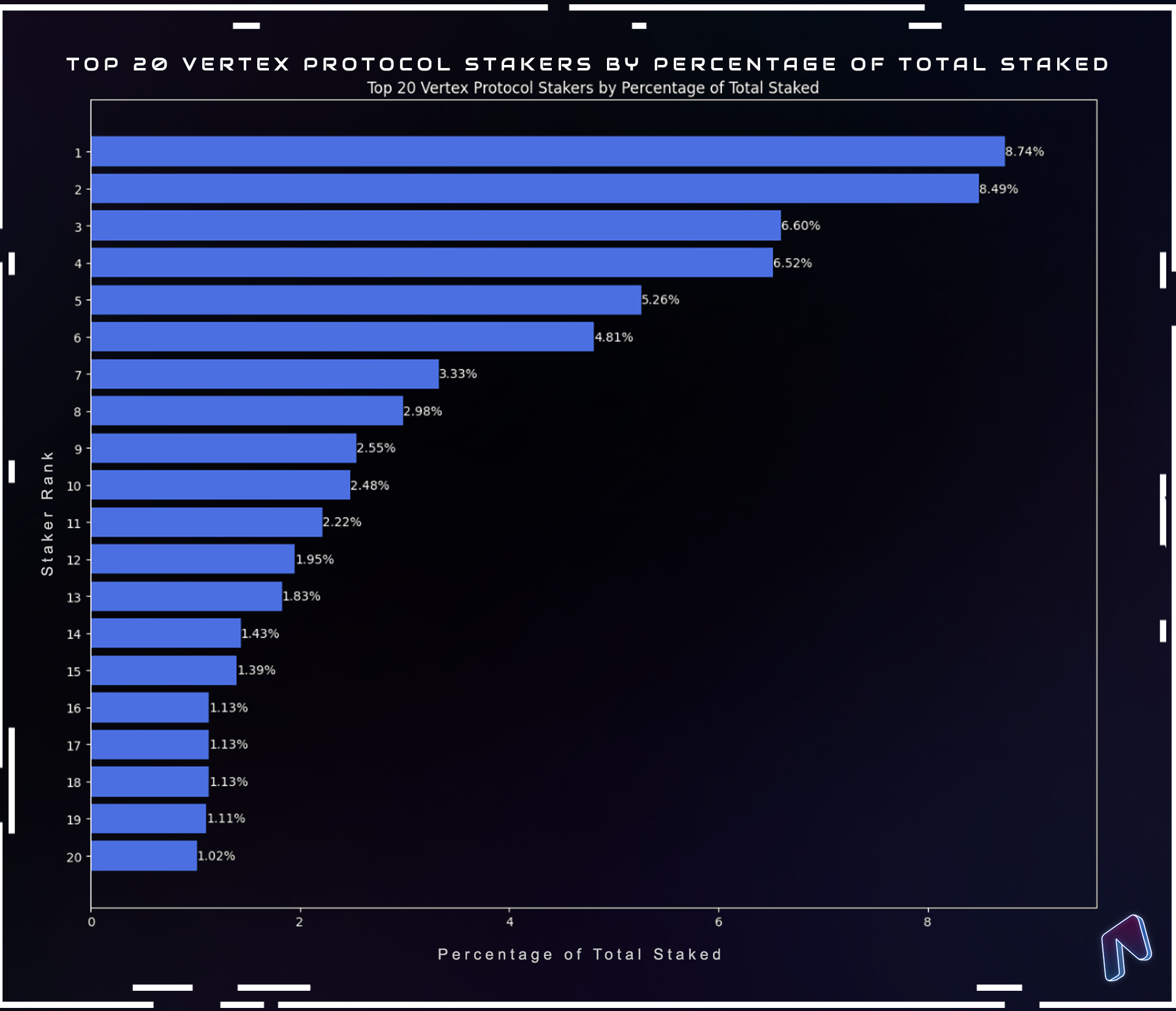
Based on the public data we analyzed, we observed:
Top 1% of stakers hold 72.67% of total staked amount
Top 5% of stakers hold 92.04% of total staked amount
Top 10% of stakers hold 95.80% of total staked amount
This distribution raises interesting questions about the balance between large stakeholders and a more distributed model. While concentration isn't inherently negative and can sometimes lead to more engaged governance, it's an aspect that deserves careful consideration in protocol design.
The tradeoff between centralization and decentralization is complex: centralization can lead to more efficient decision-making and potentially stronger protocol defense, while decentralization offers greater resistance to censorship and single points of failure.
For comparison, let’s look at the distribution of Ethereum stakers:
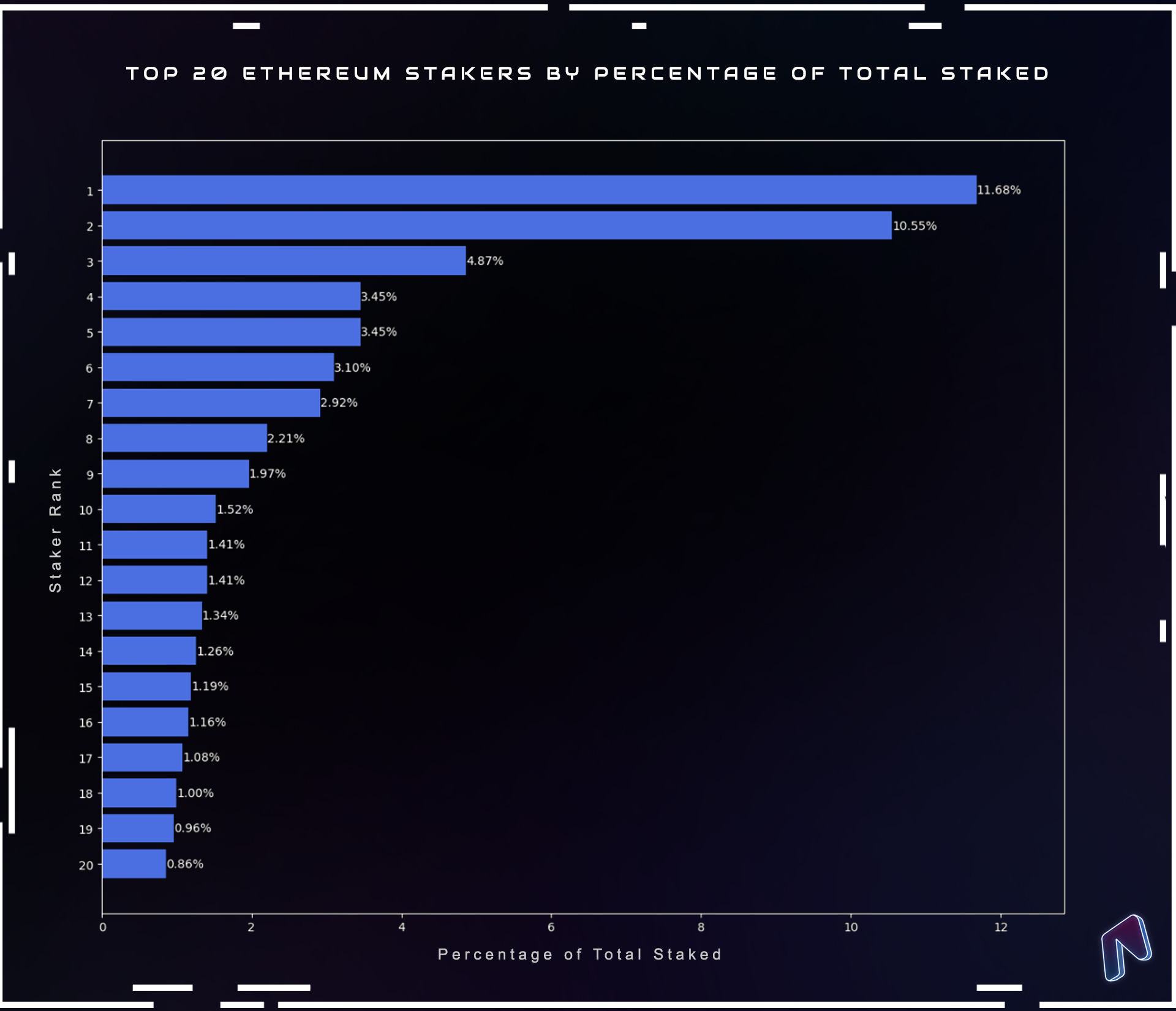
Ethereum Staker Distribution Analysis:
Top 1% of stakers hold 85.07% of total staked amount
Top 5% of stakers hold 89.15% of total staked amount
Top 10% of stakers hold 89.15% of total staked amount
Interestingly, Vertex shows a slightly more distributed staking model compared to Ethereum, particularly in the top 1% bracket, which could potentially indicate a broader base of significant stakeholders in Vertex's governance structure.
2. Potential Profit Vectors
Next, let's explore various components that could theoretically contribute to potential profits for an attacker. These profit vectors represent the financial incentives that might motivate malicious actors to compromise the protocol's security:
a. Fee Structure
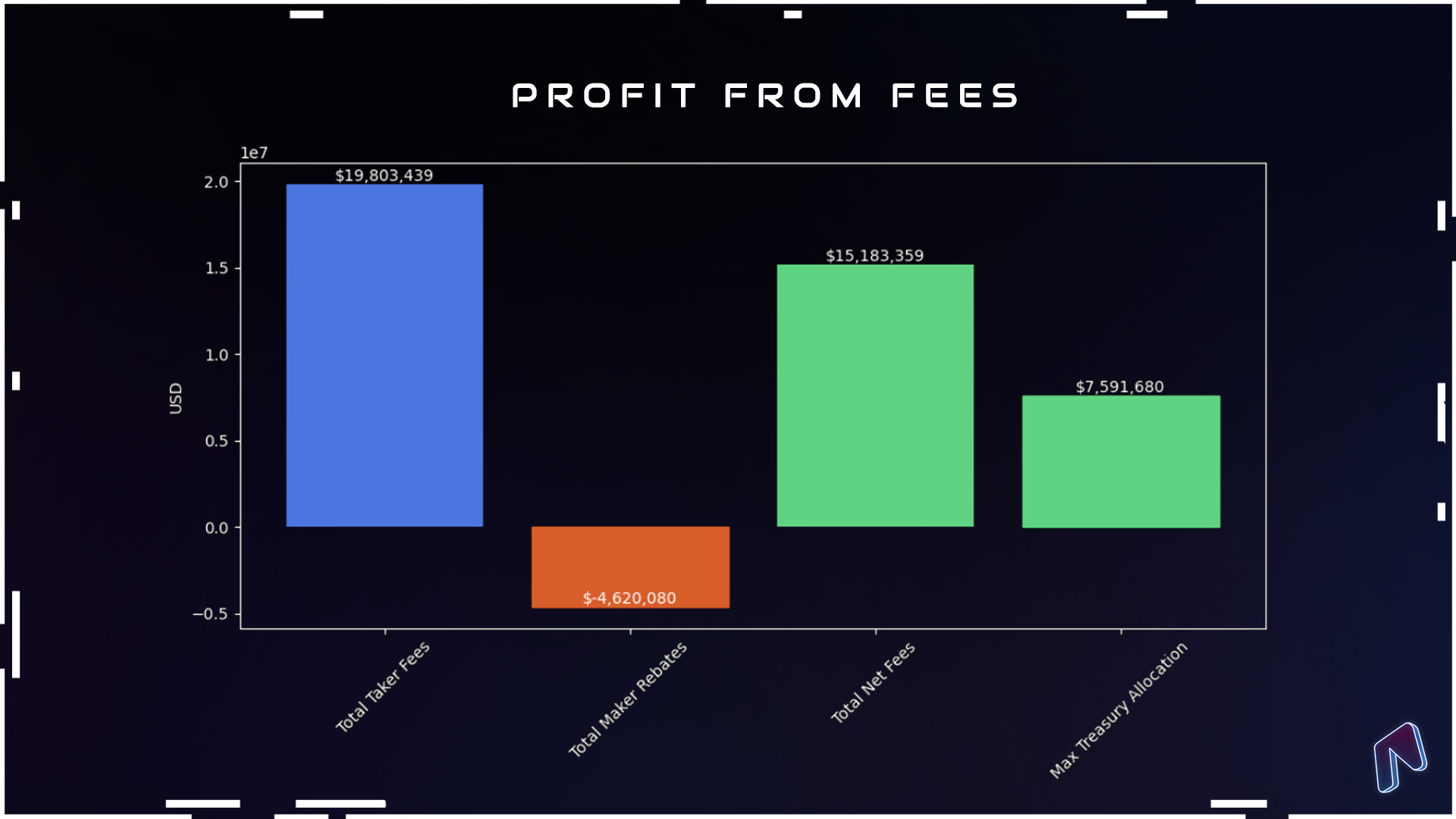
Max Treasury Allocation: $7,591,679.51
This breakdown illustrates how fees might be distributed within a protocol like Vertex. Understanding fee structures is crucial for balancing incentives for different participants. An attacker gaining control of the protocol could potentially redirect these fees to their own wallet.
b. Liquidation Mechanics
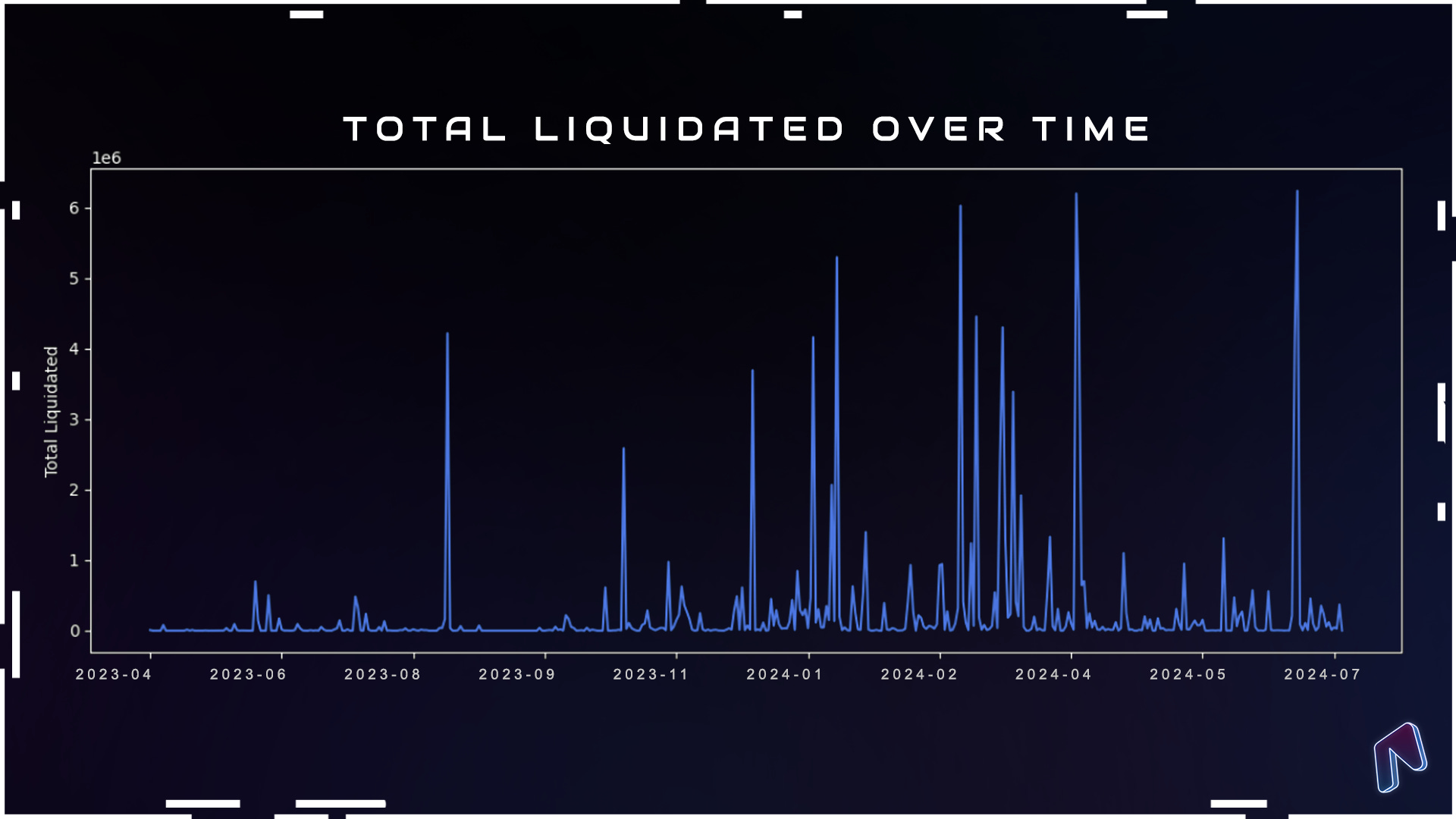
Max Daily Liquidation: $6,236,366.91
This chart illustrates the historical trend of liquidations in the protocol. The maximum daily liquidation amount represents a potential vector for profit from corruption during extreme market events. An attacker could censor transactions to force liquidations by preventing unwinding during high volatility periods.
c. VRTX Token Shorting Profit
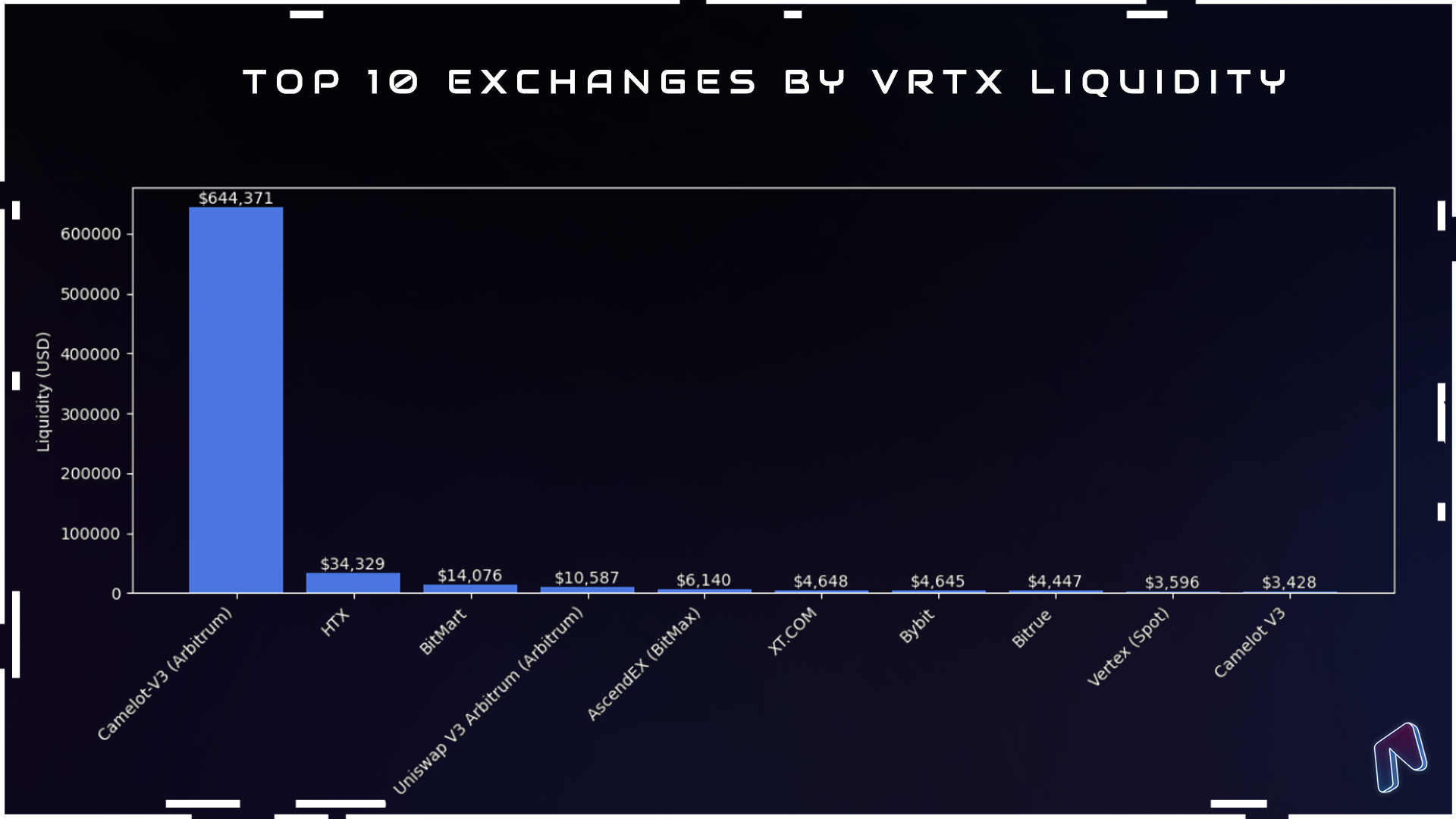
Total $VRTX liquidity across all exchanges: $734,301.70
This chart examines liquidity across CEXs and DEXs to estimate the potential profit from shorting the VRTX token in the event of a protocol takeover. An attacker who gains control of the protocol could potentially manipulate its operations, causing a price drop in VRTX, and then profit by shorting the token across various exchanges.
Implications:
An attacker's profit from shorting would be capped at the available liquidity, minus slippage and fees.
The concentration of liquidity on Camelot-V3 indicates that any significant shorting activity would likely occur primarily on this DEX.
The limited liquidity across CEXs suggests that a coordinated large-scale shorting attack across multiple exchanges would be challenging to execute.
3. Safety Factor
Let's bring together the key components we've analyzed to calculate the theoretical Safety Factor:
Cost of Corruption (CoC) vector:
Total Value Staked: $14,017,192.38
Assuming a 67% threshold is required to control the governance contract…
CoC = $9,391,518.89
Potential Profit from Corruption (PfC) vectors:
Fee Structure: Max Treasury Allocation = $7,591,679.51
Liquidation Mechanics: Max Daily Liquidation = $6,236,366.91
VRTX Token Shorting Profit = $734,301.70
PfC = $7,591,679.51 + $6,236,366.91 + $734,301.70 = 14,562,348.12
SF = (CoC - PfC) / CoC
= ($9,391,518.89 - $14,562,348.12) / $9,391,518.89
= -0.55
A Safety Factor (SF) of -0.55 indicates that the Cost of Corruption (CoC) is lower than the Profit from Corruption (PfC) for the analyzed protocol. This negative SF suggests that, according to the theoretical model and publicly available data used in the analysis, there could potentially be an economic incentive for an attack, though it's important to note that this doesn't account for any additional security measures or non-public data the protocol may have in place.
Anzen Protocol's Perspective and Broader Implications for DeFi
At Anzen, we view economic security as a dynamic challenge that requires continuous monitoring and adjustment. Our analysis of Vertex Protocol, while based on limited public data, has highlighted several key areas for consideration in DeFi protocol design:
Stake Distribution: The trade-offs between concentrated and distributed stake models are crucial. Our approach encourages balanced stake distribution through thoughtful incentive design.
Multiple Profit Vectors: Our analysis of Vertex highlighted various potential profit vectors for attackers, including fees, liquidations, and token shorting. This underscores the importance of comprehensive security assessments that consider all possible attack routes.
Dynamic Safety Factor: The negative Safety Factor (-0.55) calculated for Vertex emphasizes the need for continuous monitoring and adjustment of economic incentives. This aligns with Anzen's approach of dynamically adjusting incentives to maintain optimal security.
Market-Specific Dynamics: Different markets within a protocol may require tailored risk management strategies. This is reflected in our design of SF Modules for each integrated AVS.
As outlined in our whitepaper, Anzen Protocol is designed to optimize operator payments on EigenLayer, ensuring that Actively Validated Services (AVS) maintain sufficient economic security without overpaying. Our protocol's key components - SF Modules, Protocol Client, and Incentive Reserve system - work together to address these challenges, providing a flexible framework that can adapt to the unique needs of different protocols and market conditions.
Conclusion
Our exploration of economic security through the lens of Vertex Protocol reveals the complex, interconnected nature of security in DeFi. It's clear that economic security involves more than just total staked value - it's about understanding the nuances of how that value interacts with various profit vectors and market dynamics.
At Anzen, we're committed to advancing the field of economic security in DeFi. By sharing our analytical process, we hope to contribute to a more secure and sustainable ecosystem for all. Our analysis highlights the importance of comprehensive security assessments in protocol design, considering factors such as stake distribution, market-specific dynamics, and the balance between theoretical and practical risk scenarios.
While concentration isn't inherently negative and can sometimes lead to more engaged governance, it's an aspect that deserves careful consideration in protocol design. The Vertex analysis showed a more distributed staking model compared to Ethereum, which could potentially offer benefits in terms of decentralization and resilience.
This exploration raises important questions for the DeFi community to consider:
How can protocols effectively balance liquidity, security, and decentralization?
How can protocols design incentive structures that encourage a healthy distribution of stake without compromising efficiency?
What are the best practices for managing multiple profit vectors to minimize overall attack surface?
How can we leverage community engagement to enhance protocol security?
We invite the DeFi community to dig deeper into these concepts, challenge our assumptions, and contribute to the ongoing dialogue about economic security in decentralized systems.
Data:
Vertex stakers: https://dune.com/queries/3931067
Fees profit: https://dune.com/queries/3934282
Liquidations profit: https://dune.com/queries/3934207
Open interest: https://dune.com/queries/3934109
Full python notebook: Link